Residential Electrical Services in Lawrenceville, GA
20 to 50-amp circuits for HVAC, appliances, workshops, hot tubs and EV chargers — properly sized and permitted.
If your microwave trips the same breaker as your fridge, that's your circuit telling you it's overloaded. Anything that draws heavily deserves its own dedicated run, sized correctly from the panel.
Overview
It's a pattern we see constantly: a window unit, a hot tub, or a shop full of tools all sharing a circuit that was never meant to carry that much load. The fix isn't complicated, but it does need to be done right — correct wire gauge, correct breaker rating, and a receptacle that actually matches the equipment. We'll also tell you honestly if your panel is too full to add another circuit before you pay for one.
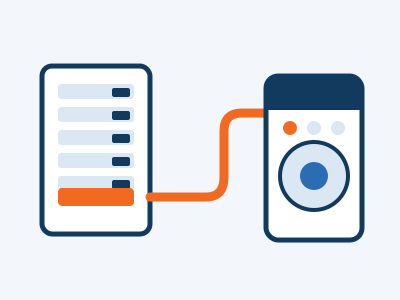
The breaker and wire are sized to the equipment's rating with the right safety margin: a 20-amp circuit uses 12-gauge copper, 30-amp uses 10-gauge, 40-amp uses 8-gauge, 50-amp uses 6-gauge. Undersized wire on an oversized breaker is one of the most dangerous DIY mistakes we correct — the breaker won't trip before the wire overheats.

Anything with a motor, a heating element, or a high startup draw should be on its own circuit. That includes your refrigerator, microwave, dishwasher, garbage disposal, washing machine, dryer, HVAC system, water heater, EV charger, hot tub, and any workshop tool over 12 amps. If two of those share a circuit, the one with the higher startup draw will trip the breaker when they both run — and in a kitchen, that's almost guaranteed to happen at the worst possible moment.
Home offices are a newer addition to the list. A computer, monitor, printer and router don't draw much individually, but sharing a circuit with a space heater or a vacuum on the same floor is a reliability problem you shouldn't have to troubleshoot during a video call.
We start with the appliance's nameplate — the sticker that lists its amperage or wattage. The circuit needs to be rated for 125% of that continuous load, which is why a 32-amp EV charger goes on a 40-amp circuit, not a 30. The wire gauge matches the breaker: 12-gauge for 20-amp, 10-gauge for 30-amp, 8-gauge for 40-amp, 6-gauge for 50-amp. We run the correct gauge from the panel to the outlet, use the right breaker type (GFCI, AFCI or standard, depending on location and code), and label it clearly in the panel directory. No guessing, no undersizing, no shared neutrals.
We provide dedicated circuit installation across Lawrenceville and nearby communities including Suwanee, Duluth, Snellville, Grayson, Dacula, Lilburn and Buford, plus much of metro Atlanta — Buckhead, Brookhaven, Sandy Springs, Chamblee, Midtown, Druid Hills and more. Our electricians are Georgia-licensed, insured, and familiar with local permit and inspection requirements.
Anything that draws heavily or trips a shared circuit belongs on its own run, correctly sized from the panel.
Who We Serve
Homes and businesses across Lawrenceville, Gwinnett County and metro Atlanta.
20 to 50-amp circuits for HVAC, appliances, workshops, hot tubs and EV chargers — properly sized and permitted.
Equipment circuits for commercial kitchens, server rooms, shop tools and point-of-sale systems sized to the load.
Why Us
The right circuit for the load — sized, permitted and inspected.
Every repair and installation carries a written workmanship warranty, plus manufacturer warranties on the parts we supply.
Georgia-licensed electrical contractor, fully insured, and every technician is background-checked and uniformed.
Shoe covers, drop cloths, and we haul away the old material. We explain what we did and why before we leave.
You approve a clear price before any work begins, with same-day appointments and true 24/7 emergency response.
Service Area
Based at 241 Lawrenceville Hwy, we serve Lawrenceville, Gwinnett County and communities across metro Atlanta. Full list in the footer below.
Licensed electricians for every job in your home or business — pick a service to see how we handle it.
FAQ
If it is a major appliance (range, dryer, HVAC, water heater, EV charger) it needs a dedicated circuit by code. If a plug-in device keeps tripping the breaker or dims the lights when it runs, that is a strong sign it needs one too.
Usually, yes. We can often free up space by replacing single-pole breakers with code-approved tandem (half-size) breakers on circuits that qualify. If the panel won’t accept tandems (some older panels don’t), we can add a small sub-panel that feeds off the main panel and provides new breaker spaces. A full panel upgrade is a third option if the panel is also outdated or undersized.
Most residential hot tubs require a 240-volt, 50-amp dedicated circuit with a GFCI breaker and a disconnect switch within sight of the tub. The wire gauge is typically 6 AWG copper. Larger swim spas or commercial-grade tubs may need a 60-amp circuit. We verify the manufacturer’s electrical specifications for your specific model before sizing the circuit, because undersizing causes nuisance tripping and can damage the heater controls.
In Gwinnett County, yes — any new circuit run from the panel requires an electrical permit and an inspection. The inspector verifies the wire gauge, breaker size, GFCI/AFCI protection and proper terminations. We pull the permit and schedule the inspection as part of every dedicated circuit installation. The permit protects you by ensuring the work meets code and is insurable.
Appliances, chargers and equipment on their own properly sized circuit, not an overloaded shared one.