
Residential Electrical Services in Lawrenceville, GA
Kitchen, bath, garage, laundry and outdoor GFCI protection installed to current code, plus troubleshooting GFCIs that won't reset.
If your kitchen, bathroom or garage doesn't have GFCI protection, you're one wet hand away from a problem it's designed to prevent. We install and repair GFCI outlets throughout your home — it's one of the cheapest safety upgrades an older house can get.
Overview
GFCI protection is one of those things you don't think about until you need it, and by then it's too late to add it. Code requires it in kitchens, bathrooms, garages and outdoors for good reason — these are the spots where water and electricity are most likely to meet. If your GFCI won't reset, or you've still got two-prong outlets in wet areas, we can usually sort it out in one visit.
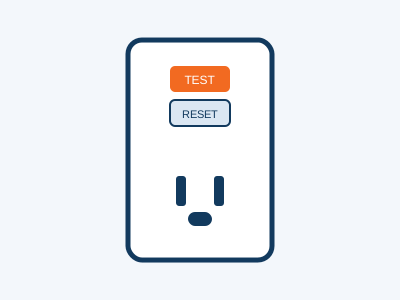
If your home was built or last updated before these rules, adding GFCI protection is a fast, affordable upgrade — and a common item flagged on home inspections.
We can protect a circuit with a GFCI receptacle (protects everything downstream of it) or a GFCI breaker at the panel (protects the whole circuit). The right choice depends on your wiring layout and how the circuit is shared — we'll pick the cleaner, more reliable option for your home.

A GFCI that won't reset is either doing its job (there's a real ground fault downstream, often moisture in an outdoor or bathroom outlet), has reached the end of its life (they wear out in 7–10 years), or was miswired. We test the circuit, find any fault, and replace the device if it's failed.
GFCI protection can be added to ungrounded (two-wire) circuits as a shock-safety improvement, labeled "No Equipment Ground" per code. It's a legitimate way to get three-prong outlets and protection in an older home without a full rewire — though we'll also tell you when rewiring is the better long-term answer.
The current National Electrical Code requires GFCI protection in every bathroom, kitchen (countertop receptacles), garage, laundry area, outdoor location, crawlspace, unfinished basement, boathouse and any receptacle within six feet of a sink. Older Lawrenceville homes were built to the code of their era, which didn't require GFCI in many of those locations. We're not required to retrofit your entire house to current code, but when we're working on a circuit that serves one of those areas, we bring it up to date — and when we see a missing GFCI in a wet location, we'll flag it even if that's not what you called us for.
Both do the same thing — trip in milliseconds if current leaks to ground — but they install differently. A GFCI outlet replaces a standard outlet at the point of use. A GFCI breaker installs in the panel and protects every outlet on that circuit. We typically use GFCI outlets when only one or two locations on a circuit need protection, and GFCI breakers when the whole circuit serves a wet area or when the outlet boxes are too small or too hard to access for a device swap. Either way, the protection is the same; the difference is installation cost and where the test/reset button lives.
We provide gfci outlet installation across Lawrenceville and nearby communities including Suwanee, Duluth, Snellville, Grayson, Dacula, Lilburn and Buford, plus much of metro Atlanta — Buckhead, Brookhaven, Sandy Springs, Chamblee, Midtown, Druid Hills and more. Our electricians are Georgia-licensed, insured, and familiar with local permit and inspection requirements.
GFCI protection is code in wet and outdoor locations, and it is one of the cheapest safety upgrades an older home can get.
Who We Serve
Homes and businesses across Lawrenceville, Gwinnett County and metro Atlanta.
Kitchen, bath, garage, laundry and outdoor GFCI protection installed to current code, plus troubleshooting GFCIs that won't reset.
Commercial GFCI and code-required ground-fault protection for kitchens, restrooms, outdoor areas and wet locations.
Why Us
A GFCI that works is the difference between a tripped breaker and a trip to the ER.
Every repair and installation carries a written workmanship warranty, plus manufacturer warranties on the parts we supply.
Georgia-licensed electrical contractor, fully insured, and every technician is background-checked and uniformed.
Shoe covers, drop cloths, and we haul away the old material. We explain what we did and why before we leave.
You approve a clear price before any work begins, with same-day appointments and true 24/7 emergency response.
Service Area
Based at 241 Lawrenceville Hwy, we serve Lawrenceville, Gwinnett County and communities across metro Atlanta. Full list in the footer below.
Licensed electricians for every job in your home or business — pick a service to see how we handle it.
FAQ
Code requires GFCI protection on all countertop receptacles within six feet of a sink in the kitchen. In practice, that means every countertop outlet needs protection. You don’t necessarily need a GFCI device at every outlet — one GFCI outlet at the start of a circuit protects every standard outlet downstream on that same circuit. We’ll determine the most cost-effective layout.
They’re almost certainly on the same GFCI-protected circuit, and the GFCI has tripped. Look for a GFCI outlet with a popped “Reset” button — it may be in the garage, a bathroom you don’t use often, or even in the crawlspace. Press “Reset” and everything downstream should come back. If it trips again immediately, there’s a ground fault on the circuit that needs diagnosis.
Yes. GFCI outlets have an expected lifespan of about 15–25 years, depending on how often they trip and the environment (moisture, heat). Over time, the internal sensing circuitry degrades and the device may stop tripping on a fault, which defeats the purpose. Test your GFCIs monthly with the built-in test button. If the button clicks but the outlet doesn’t shut off, it’s failed and needs replacing.
Yes — and code specifically allows this as a safety upgrade for older homes that don’t have ground wires. A GFCI on an ungrounded circuit still detects current leaking to ground and trips in milliseconds, which protects you from shock. It won’t provide an equipment ground (three-prong devices won’t be grounded), but it adds the critical personal-safety protection that a two-prong outlet lacks.
Code-required ground-fault protection for every wet area — installed right so it actually protects.