Residential Electrical Services in Lawrenceville, GA
Ethernet, coax, security camera wiring, doorbell wiring and whole-home network runs installed neatly and terminated properly.
Wi-Fi is convenient until it isn't — buffering during a video call, a security camera that drops out, a smart TV that lags. Anything that actually matters performs better on a wire, and we run that wire cleanly through walls you'd never notice it in.
Overview
We get it, Wi-Fi is easy. But for access points, cameras, and anything you're streaming or working on, a hardwired connection is simply more reliable. We terminate, test and label every run so your home is actually documented — not a mystery of unlabeled cables behind the wall — whether it's a new build, a remodel, or a retrofit into a finished house.
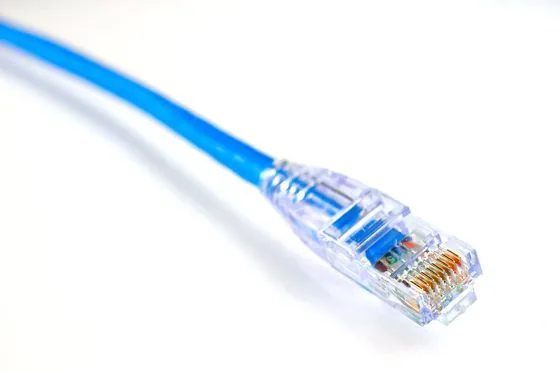
During construction or a remodel we run cabling in open walls for a clean, invisible result. For finished homes we fish runs through attics, basements and wall cavities, keeping access points small and patchable — the same techniques we use for rewiring.
Wi-Fi is only as good as what feeds it. Hardwired access points placed around the home, each on a dedicated cable back to a central switch, eliminate dead zones and congestion. Cameras, desktops, game consoles and streaming devices all perform better wired, and it takes load off the wireless network for the devices that truly need it.
Low-voltage covers everything that runs at 50 volts or below: Cat6 ethernet for home networks, coaxial for cable and antenna, speaker wire for distributed audio, thermostat wire for HVAC controls, doorbell transformer and wire, security camera cabling (Cat6 for PoE cameras), and landscape lighting wire. Each type has its own requirements for gauge, shielding and separation from high-voltage wiring. We run them to TIA/EIA standards for data and follow NEC low-voltage separation rules so your network doesn't pick up interference from the 240-volt dryer circuit in the next stud bay.
A structured wiring panel — mounted in a closet, utility room or garage — is where all your low-voltage runs terminate. Cat6 from every room, coax from the cable entry, security camera feeds and the incoming internet line all land in one enclosure with patch panels, a small switch and your router. It turns a tangle of cables behind the TV into a clean, organised system you can troubleshoot in one place. We install the panel, terminate and test every run, and label everything so the next person who opens it knows what goes where.
If you're retrofitting an existing Lawrenceville home, we can usually fish cable through the attic and interior walls without major drywall work — it depends on the house, but a site visit tells us quickly what's feasible.
Low-voltage data cables pick up electromagnetic interference when they run parallel to high-voltage power lines inside the same wall cavity. That interference shows up as slow network speeds, dropped connections or audio hum on speaker lines. The NEC requires a minimum separation — typically 12 inches for unshielded data cable running parallel to a power line, or crossing at 90 degrees. We maintain those separations on every install, use shielded cable where the separation isn't achievable, and test every data run with a cable certifier to confirm the link meets Cat6 performance standards. A wired network that's marginal on day one will fail when you add more devices.
We provide low voltage and structured wiring across Lawrenceville and nearby communities including Suwanee, Duluth, Snellville, Grayson, Dacula, Lilburn and Buford, plus much of metro Atlanta — Buckhead, Brookhaven, Sandy Springs, Chamblee, Midtown, Druid Hills and more. Our electricians are Georgia-licensed, insured, and familiar with local permit and inspection requirements.
Wi-Fi is convenient, but anything that matters, from access points to cameras, performs better on a wire.
Who We Serve
Homes and businesses across Lawrenceville, Gwinnett County and metro Atlanta.
Ethernet, coax, security camera wiring, doorbell wiring and whole-home network runs installed neatly and terminated properly.
Structured cabling, data drops, security and AV wiring for offices, retail and commercial spaces — Cat6, fiber and coax.
Why Us
Clean runs, proper terminations and a network that actually works.
Every repair and installation carries a written workmanship warranty, plus manufacturer warranties on the parts we supply.
Georgia-licensed electrical contractor, fully insured, and every technician is background-checked and uniformed.
Shoe covers, drop cloths, and we haul away the old material. We explain what we did and why before we leave.
You approve a clear price before any work begins, with same-day appointments and true 24/7 emergency response.
Service Area
Based at 241 Lawrenceville Hwy, we serve Lawrenceville, Gwinnett County and communities across metro Atlanta. Full list in the footer below.
Licensed electricians for every job in your home or business — pick a service to see how we handle it.
FAQ
Yes. We fish Cat6 cable through the attic, interior walls and crawlspace to reach the rooms you need. Accessibility varies by house — a ranch with open attic and crawlspace access is straightforward; a two-storey with finished walls on every floor is more involved. A site visit tells us which routes are feasible and how many access points we’ll need. Most retrofits can be done with minimal drywall disruption.
A structured wiring panel is a centralized enclosure — typically mounted in a closet, utility room or garage — where all your low-voltage runs terminate. Cat6 from every room, coax from the cable entry, security camera feeds and the incoming internet line all land in one box with patch panels and a small network switch. It turns scattered cable runs into an organised system you can troubleshoot and expand from one location.
Yes. We run Cat6 cable from the camera locations to your network switch or NVR, providing both data and power (PoE — Power over Ethernet) over a single cable. Cat6 supports PoE cameras up to about 300 feet. We mount outdoor-rated conduit or cable clips for exterior runs and terminate each cable at a patch panel. We handle the cabling infrastructure; camera selection and software configuration are typically handled by you or your security provider.
Absolutely. Open walls are the cheapest time to run any cable — network, speaker, security camera, thermostat. The cable itself is inexpensive; the labour of fishing it through finished walls later is the costly part. Even if you don’t plan to use a wired network today, running Cat6 to each room during a remodel future-proofs the house at minimal added cost. We coordinate the low-voltage rough-in with the high-voltage work.
Ethernet, camera, doorbell and whole-home network runs — clean, tested and labeled.