
Residential Electrical Services in Lawrenceville, GA
Recessed, pendant, chandelier, under-cabinet, dimmer and exterior fixtures installed and wired to code on the first visit.
Whether you're hanging a chandelier over the dining table or finally getting rid of that one dark corner, good lighting comes down to two things: the fixture and the wiring behind it. We handle both, so what you end up with actually works the way you pictured it.
Overview
Lighting installation covers mounting, wiring and connecting new light fixtures — recessed cans, pendants, chandeliers, under-cabinet strips and exterior fixtures — to your home’s electrical system. There's a difference between a fixture that's technically installed and one that's installed right — wired cleanly, switched the way you actually want to use the room, and dimmable without buzzing or flickering. We do the planning up front, whether that's spacing recessed cans so there are no dark spots or making sure a heavy fixture has real support behind the ceiling.
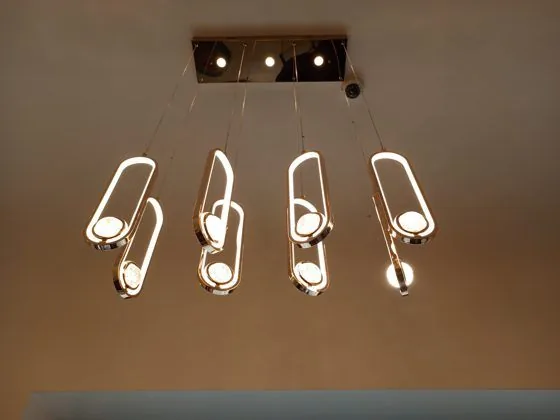

We plan spacing based on ceiling height and room use, keep fixtures off the walls the right distance, choose beam spread for the task, and set a consistent color temperature (2700K–3000K for living spaces, cooler for work areas). In insulated ceilings we use IC-rated, air-tight fixtures so you're not losing conditioned air into the attic.
Most dimming problems come from pairing an LED fixture with an old incandescent dimmer or a control that isn't rated for the (very small) LED load. We spec compatible dimmers and, on larger jobs, verify the combination so your lights dim smoothly to a low level without hum or drop-out.
Recessed cans aren't a scatter-shot job — spacing, beam angle and ceiling height all determine whether a room looks evenly lit or full of hot spots and shadows. We measure the room, check the ceiling construction (joists, insulation, HVAC runs) and plan the layout before we cut a single hole. In a typical 12×14 kitchen with 9-foot ceilings, that usually means six 4-inch cans on a dimmer, spaced about 4 feet apart and 2 feet off the walls. We'll show you the plan and adjust it before we start.
Most LED flickering in Lawrenceville homes comes down to one of three things: an old dimmer that isn't rated for LED, a driver that's incompatible with the dimmer curve, or a loose neutral on the circuit. We see all three regularly. The fix depends on the cause — sometimes it's a $12 dimmer swap, sometimes it's a wiring connection that needs remaking. We test the full circuit before we recommend a fix, because swapping the dimmer only to find the real problem is upstream wastes your money and our time.
Under-cabinet lighting in kitchens isn't decorative — it's the difference between chopping vegetables in your own shadow and having even, glare-free light on the countertop. We install hardwired LED strips or puck lights on a dedicated switch or dimmer, routed behind the cabinets so there are no visible wires. Hardwired is worth the small extra cost over plug-in strips because it looks cleaner, lasts longer, and doesn't take up an outlet you need for appliances.
We provide lighting installation across Lawrenceville and nearby communities including Suwanee, Duluth, Snellville, Grayson, Dacula, Lilburn and Buford, plus much of metro Atlanta — Buckhead, Brookhaven, Sandy Springs, Chamblee, Midtown, Druid Hills and more. Our electricians are Georgia-licensed, insured, and familiar with local permit and inspection requirements.
We handle the wiring, the switching and the fixture itself, so the result is even, quiet and dimmable where you want it.
Who We Serve
Homes and businesses across Lawrenceville, Gwinnett County and metro Atlanta.
Recessed, pendant, chandelier, under-cabinet, dimmer and exterior fixtures installed and wired to code on the first visit.
Office, retail and restaurant lighting — track, troffer, can and decorative fixtures installed to plan, on schedule.
Why Us
Good lighting changes how a room feels and how you use it.
Every repair and installation carries a written workmanship warranty, plus manufacturer warranties on the parts we supply.
Georgia-licensed electrical contractor, fully insured, and every technician is background-checked and uniformed.
Shoe covers, drop cloths, and we haul away the old material. We explain what we did and why before we leave.
You approve a clear price before any work begins, with same-day appointments and true 24/7 emergency response.
Service Area
Based at 241 Lawrenceville Hwy, we serve Lawrenceville, Gwinnett County and communities across metro Atlanta. Full list in the footer below.
Licensed electricians for every job in your home or business — pick a service to see how we handle it.
FAQ
It depends on the room size, ceiling height, and the beam angle of the fixtures. As a starting point: divide the room’s square footage by 12 to get the approximate number of 4-inch cans for general illumination. A 12×14 kitchen with 9-foot ceilings typically needs six cans on a dimmer. We plan the layout and show you before we cut any holes.
Yes, but the approach differs. With attic access, we cut holes from above and drop the cans in. Without it (first floor with a room above), we use remodel housings that mount through a ceiling cut without needing access from above. The installation is slightly more involved, but the end result looks the same. We assess the ceiling structure before quoting.
Yes. If you’ve already purchased the fixture, we’ll install it as long as it’s UL-listed and appropriate for the location (wet-rated for bathrooms/outdoors, IC-rated for insulation contact if recessed). We don’t warranty the fixture itself since we didn’t supply it, but we warranty the wiring and connections we make. If the fixture is incompatible, we’ll let you know before installing.
A general rule is to space cans at a distance equal to half the ceiling height. In an 8-foot-ceiling room, that’s 4 feet apart, with the first row 2 feet from the wall. This provides even, overlapping light coverage with no dark spots between fixtures. We adjust based on the beam angle of the specific fixture and the room’s purpose — task lighting in a kitchen needs tighter spacing than ambient light in a living room.
Yes. We use remodel-style housings designed to install through a small hole in the ceiling without opening it up from above. We run new wiring through the attic or ceiling cavity and connect everything to a new or existing switch. The result is the same as new-construction recessed lighting.
A common guideline is one light for every 4–6 square feet of ceiling, but it depends on ceiling height, room function and personal preference. A kitchen needs more foot-candles than a living room. We lay out the fixture positions before cutting anything so you can see the spacing and adjust.
Recessed, pendant, chandelier or exterior — wired to code and looking the way you pictured it.