Residential Electrical Services in Lawrenceville, GA
Panel-mounted whole-house surge protectors to shield HVAC, appliances and electronics from lightning and utility surges.
Georgia storms don't ask permission before they send a spike through your panel, and by the time you notice, it's already fried something expensive. A panel-mounted surge protector is cheap insurance against exactly that.
Overview
Most people think of surge protection as the power strip under their desk, but the real protection happens at the panel — that's your first line of defense against lightning-induced spikes and the surges utility switching sends through the grid. Correct grounding and short lead lengths are what actually decide how well the device performs, so we don't just bolt one in and walk away.
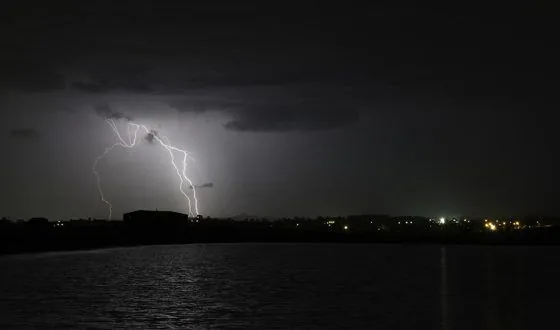
A surge protective device (SPD) installs at your main panel and clamps voltage spikes before they spread to your branch circuits, diverting the excess energy to ground in nanoseconds. It's your first layer of defense. Point-of-use protectors (power strips) at sensitive electronics are the second layer — you want both.
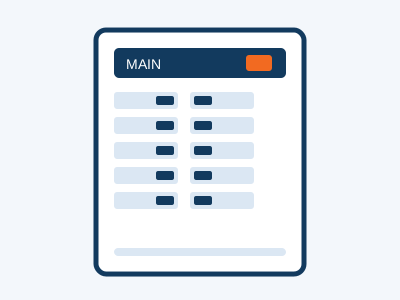
For a modern panel with an open double-pole slot, installation takes under an hour: we mount the SPD, land it on a short dedicated breaker, and verify the indicator. Older or full panels may need a breaker added or a small load-center change first — often a good moment to talk about a panel evaluation.
We install UL 1449-listed Type 2 devices with a solid joule rating, a low let-through (clamping) voltage, and a status indicator or alarm so you know when the unit has taken enough hits to need replacement. Many carry a connected-equipment warranty from the manufacturer.
A whole-house surge protective device (SPD) installs at your main panel and clamps voltage spikes before they reach any circuit in your home. When a surge hits — from lightning, a utility switching event, or your own HVAC compressor cycling — the SPD diverts the excess energy to your grounding system in nanoseconds. It doesn't stop the power; it shaves off the peak that would otherwise fry a control board or LED driver.
The device is rated in joules, which is its total energy-absorption capacity. A good residential unit handles 50,000–80,000 joules and lasts years under normal conditions. When it's exhausted, a status light tells you it's time to replace it. We install units with audible and visual indicators so you'll know if protection has dropped.
Plug-in power strips with surge ratings protect one outlet. They do nothing for your HVAC system, water heater, refrigerator, garage door opener, or hardwired smoke detectors — all of which have circuit boards that a surge can destroy. A single lightning strike near a Gwinnett County power line sends a surge into every circuit in your home simultaneously, and a strip at your TV doesn't help the $3,000 control board in your heat pump.
The smartest setup is a whole-house SPD at the panel plus point-of-use strips at your most expensive electronics. The panel unit catches the big surges; the strip catches the smaller, repetitive ones that slip through. Together they're less than $500 installed — less than one HVAC control board replacement.
We provide whole-house surge protection across Lawrenceville and nearby communities including Suwanee, Duluth, Snellville, Grayson, Dacula, Lilburn and Buford, plus much of metro Atlanta — Buckhead, Brookhaven, Sandy Springs, Chamblee, Midtown, Druid Hills and more. Our electricians are Georgia-licensed, insured, and familiar with local permit and inspection requirements.
Georgia storms and utility switching send spikes through the panel, and a panel-mounted device is the first line of defence.
Who We Serve
Homes and businesses across Lawrenceville, Gwinnett County and metro Atlanta.
Panel-mounted whole-house surge protectors to shield HVAC, appliances and electronics from lightning and utility surges.
Commercial surge protection for sensitive equipment, data infrastructure and point-of-sale systems.
Why Us
One good lightning strike can cost more than every appliance in your house.
Every repair and installation carries a written workmanship warranty, plus manufacturer warranties on the parts we supply.
Georgia-licensed electrical contractor, fully insured, and every technician is background-checked and uniformed.
Shoe covers, drop cloths, and we haul away the old material. We explain what we did and why before we leave.
You approve a clear price before any work begins, with same-day appointments and true 24/7 emergency response.
Service Area
Based at 241 Lawrenceville Hwy, we serve Lawrenceville, Gwinnett County and communities across metro Atlanta. Full list in the footer below.
Licensed electricians for every job in your home or business — pick a service to see how we handle it.
FAQ
For a Lawrenceville home, yes. Georgia Power’s grid is exposed to frequent lightning, and even small surges from utility switching events degrade electronics over time. A whole-house surge protective device costs a fraction of what it protects: one HVAC control board replacement typically costs more than the SPD installation. The device pays for itself the first time it absorbs a surge that would have damaged equipment.
Ideally, yes. A panel-mounted SPD catches the large surges (lightning, utility switching) before they enter your circuits. A quality point-of-use strip at your TV, computer or home theatre catches the smaller, repetitive surges that the panel unit lets through. Together, they provide layered protection. Cheap power strips with low joule ratings aren’t effective — look for UL-listed strips rated at 2,000+ joules.
A surge protective device has a finite energy-absorption capacity, measured in joules. Each surge it absorbs depletes that capacity. Most quality residential SPDs last 5–10 years under normal conditions. The unit has a status indicator (LED or audible alert) that tells you when its protection is exhausted and it needs replacing. We install units with clear indicators so you know when it’s time.
In most cases, yes. A whole-house SPD connects to two available breaker spaces in your panel. If your panel is full, we can often make room by using tandem breakers where code allows, or by consolidating lightly loaded circuits. If the panel truly has no room and won’t accept tandems, we’ll tell you and discuss options. The SPD installation itself takes about an hour.
One panel-mounted device protects every outlet in your home from surges and lightning.