Residential Electrical Services in Lawrenceville, GA
Tripping breakers, phantom faults, flickering lights and dead circuits traced to the source with professional diagnostic equipment.
An intermittent electrical problem is the kind that's easy to ignore — until it's not. If something only acts up sometimes, that's exactly when you need real testing, not a guess-and-replace approach.
Overview
Intermittent faults are the hardest kind to catch, and honestly, the most dangerous to ignore just because they're inconvenient to chase down. We use meters, testers and thermal imaging to isolate the actual cause instead of throwing parts at the problem and hoping one of them sticks. Once we find it, you get a plain-English explanation of what was actually wrong.
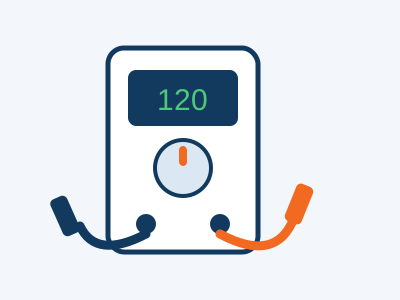

We charge a diagnostic fee for the time it takes to find the fault, quoted up front and credited toward the repair when you have us complete it. Complex, intermittent faults take longer to corner — we'll keep you posted on progress rather than running an open meter.
Flickering lights, a circuit that trips under normal load, a buzzing sound behind the wall, an outlet that works intermittently, a burning smell with no visible source — each of these has a specific electrical cause, and the first step is always diagnosis, not replacement. Flickering usually means a loose connection somewhere on the circuit, not a bad fixture. A tripping breaker is often an overloaded circuit, but it can also be a failing breaker, a ground fault in the wiring, or a short in an appliance. We isolate the cause before we quote the fix.
We start at the symptom and work backward. If a circuit is tripping, we measure the load on it, check for ground faults with a megger, inspect the breaker's thermal contacts, and test each device on the circuit individually. If lights are flickering, we check voltage at the panel, at the fixture and at every junction box in between — the drop tells us where the loose or corroded connection is. We document what we find and show you before we start fixing, so you understand what you're paying for and why.
Most diagnostic visits in Lawrenceville take 45 minutes to an hour and a half, depending on how buried the problem is. Some problems (an overloaded circuit, a bad breaker) are same-day fixes; others (a short inside a finished wall) may need a second visit for the repair.
A breaker that trips once after you plugged in a space heater and a hair dryer on the same circuit? Turn one off, reset the breaker, move on — you overloaded the circuit. A breaker that trips repeatedly with nothing obvious pulling heavy load, or one that won't stay reset, needs professional diagnosis. Same for an outlet that stopped working and isn't on a tripped GFCI, a buzzing sound behind the wall, warm cover plates, or a persistent burning smell. Those are signs of a wiring problem that a breaker reset doesn't fix and shouldn't mask. Call us and describe what you see — we'll tell you on the phone whether it needs a same-day visit.
We provide electrical troubleshooting and diagnostics across Lawrenceville and nearby communities including Suwanee, Duluth, Snellville, Grayson, Dacula, Lilburn and Buford, plus much of metro Atlanta — Buckhead, Brookhaven, Sandy Springs, Chamblee, Midtown, Druid Hills and more. Our electricians are Georgia-licensed, insured, and familiar with local permit and inspection requirements.
Intermittent faults are the hardest and the most dangerous, because they are easy to ignore until they are not.
Who We Serve
Homes and businesses across Lawrenceville, Gwinnett County and metro Atlanta.
Tripping breakers, phantom faults, flickering lights and dead circuits traced to the source with professional diagnostic equipment.
Intermittent power issues, equipment faults and mystery trips in commercial spaces diagnosed and documented.
Why Us
Finding what's wrong is the hardest part — and the part we're best at.
Every repair and installation carries a written workmanship warranty, plus manufacturer warranties on the parts we supply.
Georgia-licensed electrical contractor, fully insured, and every technician is background-checked and uniformed.
Shoe covers, drop cloths, and we haul away the old material. We explain what we did and why before we leave.
You approve a clear price before any work begins, with same-day appointments and true 24/7 emergency response.
Service Area
Based at 241 Lawrenceville Hwy, we serve Lawrenceville, Gwinnett County and communities across metro Atlanta. Full list in the footer below.
Licensed electricians for every job in your home or business — pick a service to see how we handle it.
FAQ
We can usually find what others miss because we use a systematic diagnostic approach: circuit analysis, thermal imaging, megger (insulation resistance) testing and load monitoring. Intermittent problems — the ones that only happen under specific load conditions or at certain times of day — are the hardest to catch and the ones most commonly given up on. We don’t guess; we measure.
Water is getting into the circuit somewhere. The most common entry points are an outdoor junction box with a missing or cracked cover, an underground conduit splice that’s lost its seal, or a weatherhead that’s letting rain run down the service entrance cable. The moisture creates a ground fault that trips the breaker or GFCI. We find the entry point with insulation-resistance testing and seal or replace the compromised component.
In many cases, yes. We use a time-domain reflectometer (TDR) to locate a break or short in a wire run, thermal imaging to find overheating connections behind drywall, and toning equipment to trace individual conductors through walls and ceilings. These tools let us pinpoint the problem area and limit the drywall opening to the smallest possible access point.
We charge a flat diagnostic fee for the visit, which covers the trip, the investigation and a written explanation of what we found. If you approve the repair, the diagnostic fee is applied toward the total cost — you don’t pay it twice. The repair cost depends on what we find: a loose connection is a quick fix; a buried short in a finished wall takes more time and access work.
We trace the fault with diagnostic tools, not guesswork, and fix it at the source.